
Coke County Arrest Warrants Explained
Texas Code of Criminal Procedure Article 15.01 sets the definition. An arrest warrant is a written order from a magistrate telling a peace officer, or a person the magistrate names, to take the accused into custody and bring them before the law. A bench warrant is a different animal; it grows out of an appearance problem in a case already open. A search warrant, in turn, authorizes a search of a stated place or item rather than an arrest. Coke County posts no public arrest-warrant list, no local warrant number format, and no sample entry. So where should a person turn? The issuing court and the Sheriff can state the exact type and status of a warrant. A blank calendar search proves nothing. If nothing turns up, do not assume no arrest process exists. For the full framework, the county points to the official Chapter 15 text, which governs arrest warrants across Texas.
Coke County 51st District Court Warrants
Felony cases in Coke County belong to the 51st Judicial District Court. That bench spreads across several counties. Its Coke County page names Judge Carmen Symes Dusek and routes criminal coordination to Nydia Garcia, who takes questions by email only. The combined County/District Clerk at the Robert Lee courthouse can help you find the right cause file. One wrinkle matters, though. The court's primary location sits in San Angelo, so a Robert Lee courthouse address does not mean the judge holds court there every day. For this multi-county setup, the county's own page lays out the local contact route: Read the Coke County District Court contact page.
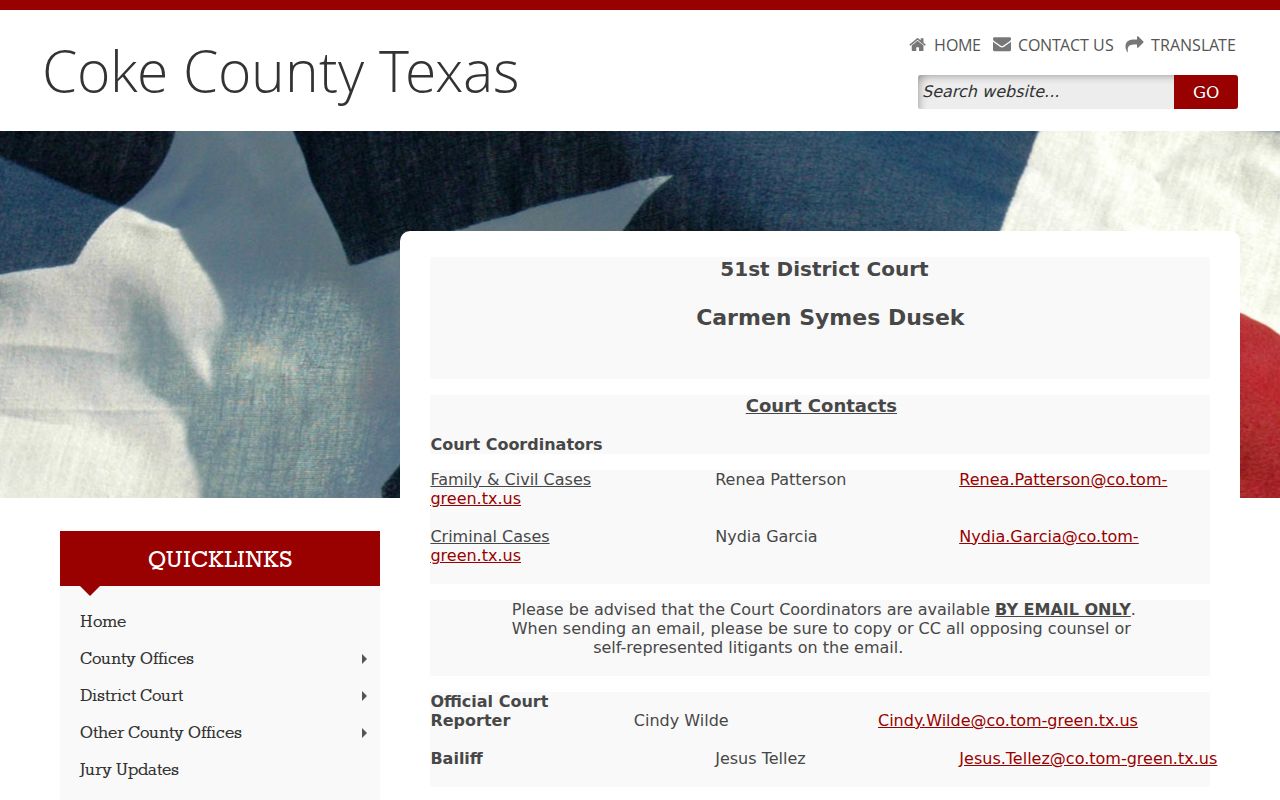
For felony warrant status in Coke County, ask the clerk to pull the district cause. Then follow the coordinator's email-only instruction.
Inside a Coke County Arrest Warrant
A warrant record can tie together plenty: the cause number, issuing judge, issue date, offense, probable-cause filing, bond terms, serving agency, and return or recall status. Coke County has no public sample entry. Ask the court which of those facts it keeps and which parts are open. A sealed filing or an investigative exception can still block access.
| Cause number | Local district or county format is not published. |
|---|---|
| Complaint or affidavit | May support probable cause; public access can be limited while sealed or active. |
| Charge and court | Ask for the offense, classification, issuer, and current case route. |
| Bond and holds | No Coke warrant bond schedule or public no-bond list was found. |
| Service status | Ask whether the warrant was served, returned, recalled, or remains active. |
Do not treat this question list as a description of a local public screen.
Coke County Article 15.26 Warrant Rule
Article 15.26 of the Texas Code of Criminal Procedure governs how a warrant gets served. The officer executing it must make the authority known and, on request, show the warrant as soon as possible. That is an execution rule only. It does not make Coke County publish an online warrant list. Nor does it promise that an officer will confirm an unserved warrant by phone. Chapter 15 is a legal reference rather than a Coke County warrant record, so read the current text directly for the complete rule: See Chapter 15 from the Texas Legislature.
For local status and next steps, the issuing court and Sheriff remain the contacts.
Serving Arrest Warrants in Coke County
Serving warrants in Coke County falls to the Sheriff's Office at 13 E. 7th Street in Robert Lee, reachable at (325) 453-2717. Beyond that number, hard details are thin. The official site names no warrant sergeant, posts no service map, lists no 24-hour phone line, and gives no current booking address or assignment chart. Bronte and Robert Lee city peace officers can act within their authority, though their city websites publish no warrant-unit contact either. What happens after service follows the state process. The person is taken into custody, brought before a magistrate, and given release conditions. Coke County does not publish local booking or magistration timing. If the matter is urgent, call the Sheriff first for current instructions.
Coke County Arrest Warrant Bond Details
Coke County publishes no warrant bond schedule, no bond counter, no payment portal, no list of accepted bond instruments, and no walk-through procedure. The County Clerk lists ordinary office payment types. That says nothing about how an arrest bond actually gets posted. The clerk's cash-bail release motion covers funds after a final judgment or a no-prosecution outcome, not a first bond or a warrant recall. So ask the issuing court directly. Is a bond set? Does another hold exist? Can a lawyer arrange a planned appearance? Then confirm the place and method with the Sheriff. One caution: the old Coke County Jail is a historic site, not an intake instruction. For paperwork, the combined County/District Clerk can be reached through the official clerk contact page.
Comparing Arrest, Summons, and Bench Warrants
A summons just orders a person to appear. No custody at the outset. An arrest warrant, after probable-cause review, directs an officer to take the person before the court. A bench warrant follows an appearance problem or a court-order violation in a case already open. In Coke County, the exact paper and its issuing court control what happens next.
| Process | Why it may issue | Who confirms it |
|---|---|---|
| Summons | Notice to appear | Issuing clerk or court |
| Arrest warrant | Probable cause for an alleged offense | Issuing court and Sheriff |
| Bench warrant | Missed setting or failure to follow an order | Court that set the case |
See the Coke County bench-warrant page for lower-court FTA and capias distinctions.
Coke County Juvenile Warrant Access
Juvenile records work differently in Coke County. Texas Family Code §58.010 keeps juvenile arrest warrants, complaints, and affidavits confidential, releasing them only to authorized people in limited circumstances. The Sheriff's Open Records form says the same thing: confidential material can be withheld or redacted. A youth-diversion link on a city court page is not a public juvenile warrant lookup. For the statutory rules, review Family Code Chapter 58.
If you are authorized, contact the Coke County court handling the juvenile matter and follow its process.
Coke County Federal Warrant Boundaries
A federal warrant operates outside Coke County's court system entirely. Coke County sits in the San Angelo Division of the U.S. District Court for the Northern District of Texas. That court, not any county office, handles federal dockets. PACER offers docket access where records are public. Still, sealed complaints and warrant entries may stay hidden until unsealed or served. A county records request cannot force the federal court or the U.S. Marshals to hand over a federal record. Use the U.S. Marshals court-location page to find the right federal courthouse and contact points. The official PACER access page explains how federal dockets open to the public. Neither page promises warrant confirmation over the phone. If you suspect a federal or out-of-state hold, ask which jurisdiction issued it and talk with a lawyer.
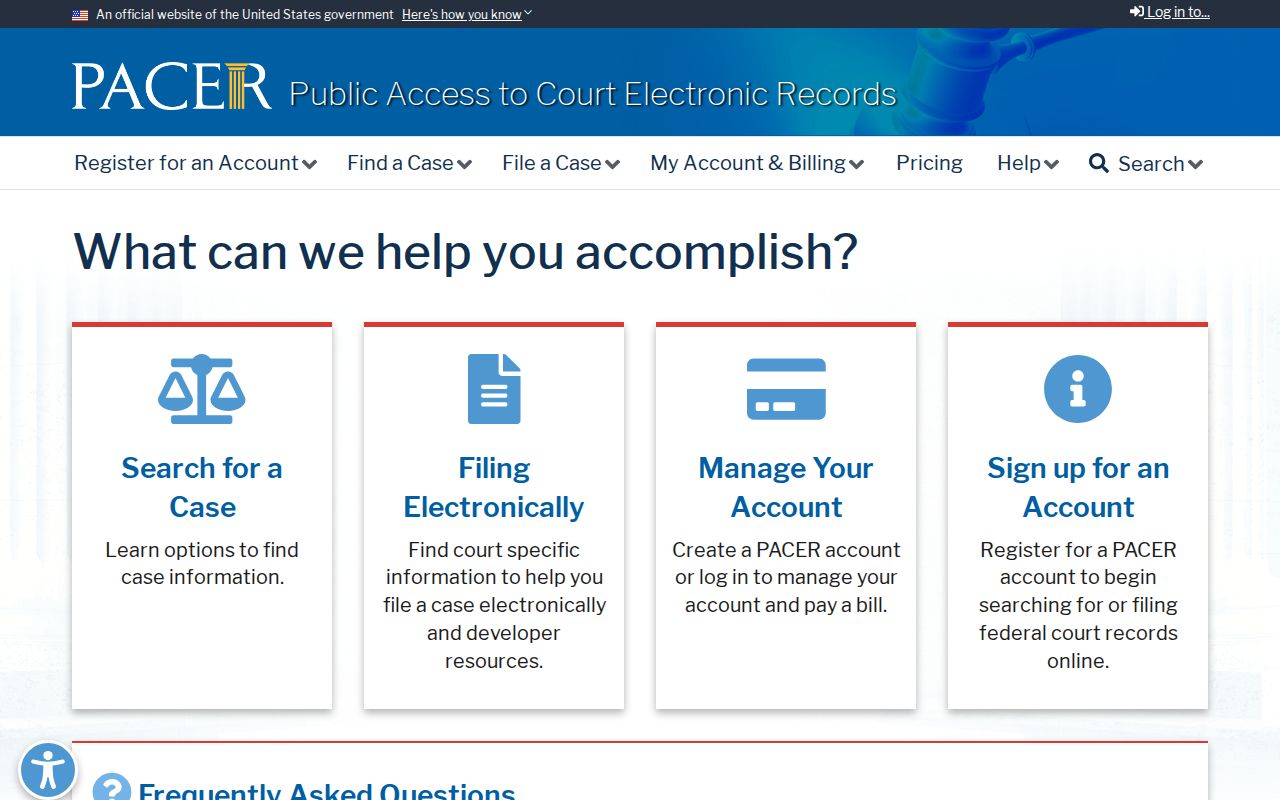
PACER shows federal dockets that are public, but sealed warrant material never surfaces as a Coke County search result.
If There's an Arrest Warrant for You
Never walk into a courthouse or jail in Coke County because an online listing said to. Confirm the order first. Call a defense attorney and the issuing court. Ask for the case number, and ask whether you can appear on a set date, post bond, or file a motion instead of being arrested. If service runs through the Sheriff, ask that office where to go and what the intake procedure is before you act. When you file a records request, seek an existing warrant or its service-status record, not an answer to a legal question. Expect exemptions and redactions. Keep every receipt and court order. Get the next hearing date in writing. Remember that posting bond or recalling a warrant does not dismiss the charge itself.
Coke County Search Warrant Access
A search warrant is different from an arrest order. It lets peace officers search a person, a place, or a thing named in the warrant. It does not tell them to arrest anyone. For Coke County readers hunting an active warrant on a person, this chapter is a side door; a warrant search or warrant check with the issuing court and the Sheriff is the better route. Chapter 18 of the Texas Code of Criminal Procedure spells out the affidavit and probable-cause requirements, and it sets its own public-access rules once a warrant is executed. Read Texas Code of Criminal Procedure Chapter 18.
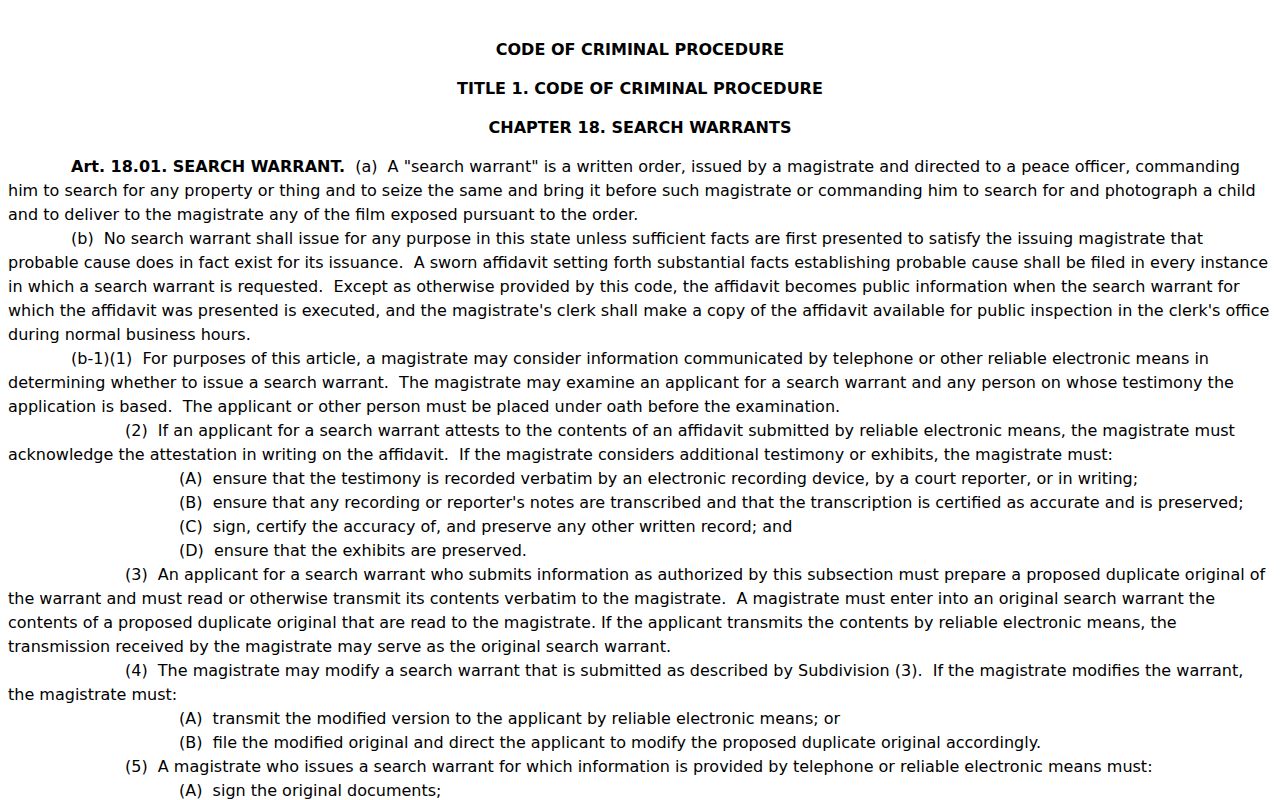
Chasing an outstanding arrest warrant in Coke County? Skip the search-warrant paperwork and ask the issuing court or the Sheriff directly.